
*Portland (including Narrawong)* 

*Major port in Western Victoria*

Portland is an attractive and scenic holiday centre situated on Portland
Bay 361 km west of Melbourne and 75 km east, by road, of the South
Australian border. As the only deep-sea port between Adelaide and Port
Phillip it is a major exporting centre for the produce of south-western
Victoria and south-eastern South Australia - principally wool, grains
and secondary manufactures made in Portland itself. Other contributions
to the local economy are made by an aluminium smelter (employing 700
people), the fertiliser industry, woolstores, and the fishing industry
(focusing particularly on crayfish, lobsters, shark, abalone and
deep-sea trawling).

The city has a current population of around 12 000 and is situated at an
elevation of 45 metres. Portland features many historic buildings and
short stretches of beach fronting safe still waters, ideal for family
recreation. Portland Bay is ideal for boating, fishing and sailboarding
and there are many fine surfing spots in the area. The district is also
profuse with outstanding natural attractions.

The Portland district was once occupied by the Kerrup-Tjmara people who
called the district 'Pulumbete' meaning 'Little Lake' (a reference to
what is now called Fawthrop Lagoon). Although there were thousands of
indigenous inhabitants in the 1830s the usual sorry tale surrounding
white impact on Aboriginal communities meant that virtually none
remained by 1885.

Matthew Flinders' reports of seals on the Furneaux Islands of Bass
Strait in 1798 fostered the rapid establishment of a sealing industry
along the southern coast. Although there are few records it seems likely
that individuals engaged in sealing did become acquainted with, and
probably even set up camp within, the large sheltered confines of
Portland Bay. The only hard evidence consists of two sealers' graves
(dated 1822 and 1828) on Julia Percy Island at the entrance to the bay.

At any rate it is known for certain that, in December 1800, Lieutenant
James Grant passed by the bay aboard the Lady Nelson, naming it after
the British home secretary, the Duke of Portland. In 1802 this section
of the coastline was scrutinized more closely by French navigator
Nicolas Baudin.

In 1828 and 1829 William Dutton visited the bay on two sealing
expeditions. He built a hut in 1829 and resided there between subsequent
sealing expeditions. The crucial event for the emergence of a permanent
settlement at Portland Bay occurred in March 1833 when Dutton, acting
for a Captain Griffiths of Launceston, established a very substantial
and lucrative whaling fishery at the bay for the extraction and shipping
of whale oil and whale bone (previously processed at Launceston).

This industry employed not only seasonal whalers (many from Cornwall in
England) but a permanent staff of factory hands, shipwrights,
sailmakers, coopers, blacksmiths, bricklayers and other artisans.
Buildings were erected and Dutton grew potatoes and other vegetables.
Most importantly, the fishery entailed the establishment of Portland Bay
as a port.

In 1833 Edward Henty undertook an unsuccessful voyage to South Australia
in search of good land for the family's rural enterprises. On the way
back he stopped in at Portland Bay to pick up whale oil for the family
company in Launceston. He made a favourable report of the immediate
environs to his father Thomas (who had made his name as a merino sheep
breeder at Sussex in England) and returned for a closer look.

After paying a visit himself Thomas Henty decided the land at Portland
Bay was suitable for the establishment of a branch of the family firm.

Thus Edward arrived with stock and servants to manage this putative
enterprise in November 1834. He was joined in December by his brother
Frank who brought with him the first merino sheep in Victoria. They set
about whaling, sealing and cropping and, in November 1835, sheared the
first sheep in Victoria. They also planted Victoria's first grape vines.

The Hentys are widely regarded as the first Europeans to establish a
permanent settlement in Victoria. Consequently in November 1984
Victoria's 150th anniversary celebrations commenced at Portland. The
Prince and Princess of Wales visited Portland the following year.
However, there seems no doubt that permanent European settlement
commenced with Dutton's large-scale fishery in March 1833 which was not,
as some have assumed, a purely seasonal enterprise.

Surveyor and explorer Thomas Mitchell visited Portland Bay during his
search for good pasturage south of the Murray River in August 1836. He
was amazed to find the settlement in existence. Indeed when an
Aboriginal guide asserted that he could see houses and a ship at anchor
Mitchell was disbelieving. However, when a boot print and broken bottle
were found in the sand, and cattle tracks nearby, he was convinced and
so named the beach area the 'Convincing Ground', by which name it is
still known today. As the explorer approached the settlement both
parties initially suspected the other of being bushrangers. Mitchell
noted some 200 people at Portland. At the Hentys' request he named the
nearby river the Surry after the family benefactor Lord Surry.

Inspired by Mitchell's reports of good land to the north of Portland,
the Henty family moved inland in 1837, marking the start of European
settlement in the Western district. In this respect the Henty dynasty
was important to the history of the state. The port served as the point
of export for their produce.

There were at least seven whaling establishments at Portland Bay by
1838. 5000 tons of oil and five thousand hundredweight of whalebone were
exported from Portland between 1833 and 1843. The enterprise peaked in
1838 when 40 boats were whaling in the bay. After 1840 the industry went
into rapid decline as numbers declined. Only twelve whales were killed
in the bay between 1851 and 1868. Dutton himself was involved in the
last such episode. Like Edward Henty he died in 1878 and his grave is
marked by a cenotaph outside the main enclosure at Narrawong Cemetery.

In 1839 police magistrate Foster Fyans was sent by Governor Gipps to Portland Bay as the
Hentys were believed to have first-hand knowledge of an Aboriginal
massacre in the area. Fyans sent no report of the massacre but wrote
much to recommend Portland Bay as the site of a port and township. A
survey was carried out from November 1839 and land sales proceeded in
1840, despite the objections of the Henty family. A police magistrate
was also appointed at this time. A building boom ensued with six hotels
and four churches appearing. The Portland Mercury (Victoria's
second-oldest newspaper) and the Guardian were established in 1842. The
first trading bank appeared in 1846 and the first savings bank the
following year.

As the hinterland was more closely settled, pastoral and agricultural
produce underscored the importance of the port. The first jetty was
built in 1846. Shipping activity was further intensified by the
goldrushes of the 1850s and 1860s. A National School appeared alongside
earlier denominational schools in 1856 and a new pier was built in 1859.
The settlement was declared a borough in 1863.

Mary MacKillop, declared a saint in 1995 for her tireless work in the
fields of education, social reform and assistance to the poor and
disadvantaged, arrived at Portland in 1862 to act as governess to the
daughters of Mrs Duncan Cameron, a relative of the family. She became
sacristan at All Saints Catholic Church. In 1863 she obtained her first
formal teaching position at a local common school (now All Saints
Primary School). She rented a house owned by Stephen Henty and there
reunited her scattered immediate family. In 1864 she set up a seminary
for 'young ladies', teaching school subjects, as well as drawing,
singing and music, in addition to her work at the common school.
However, her seminary struggled, she lost her position at the common
school and family tensions emerged in the household. Although she left
Portland in January 1866 to return to Penola, she took
with her the experience she had garnered in the fields of education and
administration.

By the end of the 1860s Portland had become a thriving commercial
centre. A meat-preserving works opened in 1869 and, in 1873, a
fish-preserving company and a wool-selling operation were established.
They joined a flour mill, a brick-and-tile company and the Portland
Steam Navigation Company.

The 1870s were to prove a boom period. The railway from Hamilton
which arrived in 1878, provided a further fillip to trade. 
However, when a system of preferential rail rates was introduced

it made it just as cheap to transport produce to Melbourne as Portland
and the trade quickly declined.

Work on a breakwater was abandoned in 1873 and, instead, prisoners were
employed in opening up the creek to form an inland fishing basin
(completed in 1891). However, siltation proved a problem and it was
feared the harbour was doomed. The construction of a deep-water pier
from 1898 to 1901 (extended in 1914) provided a new lease of life making
Portland a centre for the export of West Victorian produce. However,
trade again declined when bulk-handling facilities were established at
Geelong.

Portland was declared a town in 1949. That same year a major harbour
development program was organised. As a result two breakwaters now
enclose 100 hectares of sheltered water. There are bulk grain
facilities, shipping berths, an oil wharf, an all-purpose bulk berth and
a fishing berth.

The ALCOA aluminium smelter was built, amidst controversy, in the late
1970s and early 1980s. Portland won an award in 1984 for its innovative
work in harnessing geothermal energy from the artesian basin and it is
now a major source of energy to Portland's municipal buildings. It
became a city in 1985.

Annual events include a foreshore carnival in January, a fishing
competition in February, the Dahlia Festival in March, a jazz festival
and Pioneer Week in November and a surfboat marathon in December.

------------------------------------------------------------------------
Things to see:

*The Portland Maritime Discovery Centre, Tourist Information and Sundry
Activities*

The Portland Maritime Discovery and Visitors' Centre is located on the
foreshore of Portland, adjacent Lee Breakwater Rd. It functions as the
local information centre and it also has displays concerning aspects of
local maritime history whaling, navigation, rescue, shipwrecks, marine
life, marine exploration and the story of European immigration and
settlement. It is open from 9.00 a.m. to 5.00 p.m. daily, tel: (03) 5523
2671 or free-call (1800) 035 567. The centre also has a souvenir shop
and a restaurant with fine views of the bay.

You can make accommodation bookings here, organize itineraries and
enquire about organizations operating harbour cruises, fishing trips,
diving tours, abseiling, mountain-bike excursions, canoeing, caving, joy
flights, horseriding, tours of Cape Nelson Lighthouse, and free bus
tours to the aluminium smelter which takes in the wetlands and the
smelter's extensive nursery. They are conducted on Mondays, Wednesdays
and Fridays at 10.00 a.m. and 1.00 p.m. Maps are also available
concerning the Historic Shipwrecks Trail which follows a series of
signposts around the coastline to wreckage sites, and the Wood Wine and
Roses Forest Drive which heads north-west through the Cobboboonee State
Forest to Heywood. A Volcanic Trail is also being developed which takes
in the area's volcanic sites.

The Centre can also provide information about the opportunities for
whale watching between June and September when the whales sometimes
visit the harbour.

*Harbour Foreshore*

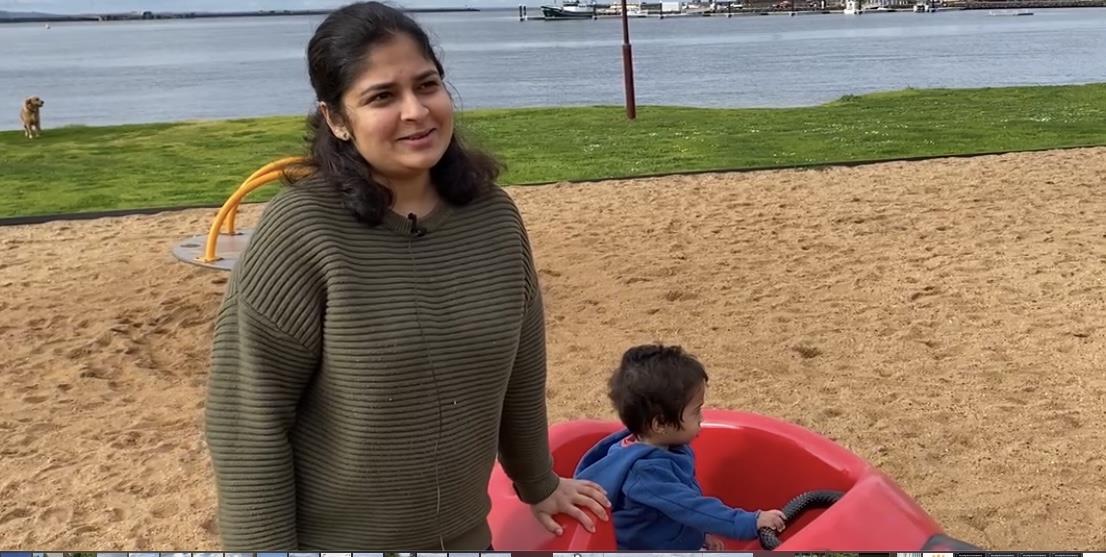
The harbour foreshore features a playground area and pedalsteamers
operate on weekends and in the summer school holidays (weather
permitting) at Henty Beach, tel: (03) 5526 5360. There is a considerable
fee.

*Lookout Tower Museum*

The World War II Memorial Lookout Tower in Wade St (which runs off the
northern end of Bentinck St) offers fine panoramic views of Portland and
the surrounding district. This 25-metre structure was built as a water
tower in the 1930s. In the 1990s it became a lookout and museum with
displays relating to Portland's involvement in World War II. It is open
daily from 10.00 a.m. to 4.00 p.m. There is an admission fee for adults,
tel: (03) 5523 3938.

*Burswood Gardens*

At the southern end of Bentinck St is a bridge which spans the canal
that adjoins the ocean to Fawthrop Lagoon. On the far side of the
bridge, to the immediate left, is Burswood, a fine bluestone
Regency-style mansion built in the early to mid 1850s for pioneer
settler Edward Henty. His third home, it is said to be a copy of a Henty
family home in Sussex. He brought the framework, 18 000 hardwood
shingles and 2500 bricks from Tasmania. It is now a bed-and-breakfast.
For a fee visitors can explore the fine 12-acre gardens which feature
330 species, including a geometric rose garden.

*Fawthrop Lagoon*

The Canal Bridge is one point of access to Fawthrop Lagoon which was
named after Portland's first harbour master. It is a permanent wetland
offering 5 km of gentle walking tracks and birdwatching opportunities
(there is a birdhide). Another point of access is from Glenelg St.

*Car Museum*

Adjacent the lagoon, at the corner of Glenelg and Percy Streets, is the
Powerhouse Car Museum which is home to a collection of veteran, vintage
classic cars and motorcycles, stationary engines, antique signs, petrol
pumps, tools, model cars, tractors, garage equipment and other
memorabilia. It is open weekdays from 1.00 p.m. to 5.00 p.m. and
weekends and school holidays from 10.00 a.m. to 5.00 p.m., tel: (03)
5523 5795.

*Portland Battery*

Like many such structures, the Portland Battery was built in 1889 during
a pervasive fear of Russian invasion. It has been fully restored and
includes the original lamp passage and powder magazine. One of the
canons dates back to 1811. Contact the Visitors' centre for firing
times. It is located in Victoria Parade.


*Point Danger*

Follow the Madeira Packet Rd south out of town, along the coastline and
past the golf course. It leads by Blacknose Point and Crumpets (both
noted surfing areas). Before you get to the aluminium smelter take the
signposted left which leads to Point Danger. There is a viewing area
(binoculars are recommended) which overlooks Lawrence Rocks, just
offshore. This is the largest nesting site of the Australasian gannet in
the Southern Hemisphere.

*The Smelter Nature Walk*

If you ignore this turnoff and continue along the main road, it leads
past the smelter to a dead end which is the start of the Smelter Nature
Walk, a 2.2-km paved track that passes through coastal cliff-top
scenery. It is wheelchair friendly and a motorised wheelchair is
available. A recent fire has destroyed the numbered information posts
but it is still a very pleasant and easy stroll, tel: (03) 5523 2671.

*The Great South Walk*

The Great South Walk constitutes more than 250 km of circular walking
track which starts and finishes at Portland. Constructed by community
groups it initially heads north through farmland, veering westwards
through native forests and the Lower Glenelg National Park, following
the southern bank of the Glenelg River to its mouth near Nelson
<VICNelson.shtml>, then returning eastwards along the coastline through
Discovery Bay National Park, with optional detours past Lake Monibeong
and to Mt Richmond. It then leads to Descartes Bay and around Cape
Bridgewater, past The Springs, the Petrified Forest, the seal colony,
Bridgwater Bay, Cape Nelson, Point Danger and back to Portland. Sections
are accessible by car to allow shorter day or weekend walks. The best
times are from October to December or late March to early June. A
detailed brochure is available from Parks Victoria offices. There are
canoeing opportunities and numerous camping spots.

*Portland Bay Lavender Farm*

Portland Bay Lavender Farm is located on the Princes Highway, 10 km east
of Portland between Narrawong and Allestree. It has a shop and cafe
selling products, gifts, plants and refreshments and is open most days
from 10.00 a.m. to 4.00 p.m., tel: (03) 5529 5316.

*Fishing*

Within the breakwaters of Portland's harbour is a large area for safe
boating and sailing. As it is protected from westerly winds, the bay may
be fished in nearly all weather conditions. There are double concrete
boat ramps near the yacht club (on the foreshore at Henty Beach) and at
the Henty Bay Caravan Park, along with three jetties and a cleaning
table. Beach access is at Wally's ramp (Fergusons Rd) for 4WDs and small
boats.

There are also boat ramps at Narrawong (17 km to the north-east via the
Henty Highway), at the mouth of the Fitzroy River near Tyrendarra East
(35 km east on the Princes Highway), at Bridgewater Beach (see previous
entry), the Bridgewater Lakes Aquatic Club (see previous entry) and from
seven landings along the Glenelg River to the west of Portland.

For those without a boat, there are rock ledges and plenty of spots for
surf and pier fishing. Bridgewater Lakes and the Glenelg, Fitzroy and
Surry Rivers are also popular spots. A fishing guide is available from
the Discovery Centre.
------------------------------------------------------------------------
Tourist Information

Portland Maritime Discovery Museum & Vistors Centre
Lee Breakwater Rd
Portland VIC 3305
Telephone: (03) 5523 2671, 1800 035 567

------------------------------------------------------------------------